Azi dimineata era sa intarzii la servici. Nu am putut sa ma dezlipesc de CNN, asteptand sa revad imaginile de acum cativa ani, cand New Orelans-ul redevenise o mlastina din pricina Katrinei de trista amintire. De data aceasta, statea la rand Marea Metropola.

Sandy, Mama uraganelor, urma sa supuna din nou la testare extrema bravul popor new-yorkez.

Pana sa vina, cu suflul lui de vreo 80 de mile pe ora, sa mature strazile Manhatten-ului, a fost prezentat de mass-media sub denumirea pompoasa de “Frankenstorm” … Bu-hu-hu, pregatiti-va sa fiti speriati de-adevarat – acu’ vine furtuna cea mai mare din ultima suta de ani … Frankenstorm de Halloween – who could wish for more?!

Ce te faci ca tocmai zilele acestea, americanii sunt pe ultima suta de metri in campania lor prezidentiala, cu tot circul de rigoare …

Prilej pentru Obama sa ne arate tuturor ca este un adevarat LEADER, care STIE si E PREGATIT sa infrunte NATURA.

Le-a multumit tuturor, s-a asigurat ca au toate resursele, s-a rugat dinainte pentru cei care vor fi afectati de urgan … “and the great thing about America is, in times like this, we all pull together!” 


Citesc articolul din NYT si imi fac cruce! Mi se zbate ochiul, parca m-as fi apropiat de Diavol …

Pe de-o parte, ma intreb cum mai rezistam in acest loc al urii si razbunarii, numit Romania?! Insa atunci cand manicurista din Poenari da interviuri care apar in ditamai NYT (editia printata din 20 Octombrie, 2012!) … devine clara intrebarea UNDE STA ASCUNSA DIPLOMATIA ROMANA?! 

In numele stramosilor care s-au intors din America sa moara pe pamantul romanesc reintregit, simt in acelasi timp revolta si tristete. Ne pare rau – le spun -, nu am putut mai mult pentru memoria voastra, decat sa fim catalogati drept “poor Balkan nation”. 

Dupa o atare lectura – singur, Pastorel e cel care ne scoate la mal si ne scapa, cu umorul lui inconfundabil: “Stau pe plaja si ma mir,/Si-mi dau singur cu sictir!”

BUCHAREST, Romania — Perhaps the best that can be said of relations between the president and prime minister of Romania is that they are unambiguous: they can’t stand each other.

That is less than surprising, given that one of the first major actions taken by Prime Minister Victor Ponta after he came to power in May was to push for a vote on whether to impeach the president, Traian Basescu. The attempt to oust Mr. Basescu failed in July, but the poisonous effects are still being felt.

The acrimony has dashed the high hopes that accompanied the electoral victory of the 40-year-old Mr. Ponta, who promised to usher in generational change in a country that has struggled to overcome one of the harshest Communist legacies among the former Soviet bloc states.

The two men are now locked in an uncomfortable cohabitation until elections in December, leaving this poor Balkan nation adrift. And even that vote, analysts say, may prove inconclusive.

In an interview at the gargantuan and opulent 1,100-room Palace of Parliament, built by the former Communist dictator Nicolae Ceausescu as a monument to his authority and grandeur, Mr. Ponta acknowledged mistakes but fell short of expressing outright regret.

He could barely conceal his contempt for Mr. Basescu, a former ship captain, whom he accused of brazenly clinging to power despite having been rejected by a majority of Romanians, calling the president politically “illegitimate.”

“My mentality as a new generation of politician is to respect the institution even if I don’t respect the person,” he said. “He will never give up. He is a former sea captain, and you won’t see a former sea captain being humble or giving up.”

Romania’s troubles have added to concerns in the United States and Europe about the political instability and threats to democratic institutions that are intensifying across the former Communist bloc.

In Hungary, Prime Minister Viktor Orban has come under criticism for flouting democracy with a series of measures that have brought the judiciary and the news media to heel. In the Czech Republic, the government has teetered on the edge of collapse with ministers involved in corruption scandals.

Romania, in particular, lacked a history of stable, enlightened governance even before it endured World War II and then decades of the Ceausescu dictatorship, which ended with his violent overthrow in 1989.

Since then, Romanians have labored to build democratic structures virtually from scratch, finding themselves in a far more challenging position than almost any of their post-Communist neighbors. Romania’s foibles have provoked debate about whether it and Bulgaria, which both entered the European Union in 2007, were invited too soon, before their cultures of lawlessness, corruption and winner-take-all politics had been uprooted.

The vociferousness of the domestic battle in Romania has overshadowed policy-making; rattled the currency, the leu; and undermined investor confidence in a country that is the second poorest in the European Union after Bulgaria.

Mr. Ponta’s government has issued more than two dozen emergency decrees — moves that, while legal, have alarmed Western diplomats and many Romanians. The government dismissed the speakers of both chambers of Parliament, which the opposition said was unconstitutional. And amid accusations that it was pressuring the Constitutional Court, the government ousted the ombudsman, who has the power to challenge emergency legislation before the court.

Some members of the progovernment media have accused foreign journalists of being anti-Romanian agents. The public remains largely disgusted with endemic graft and corruption. Adding to the mistrust are accusations that Mr. Ponta, a former prosecutor, plagiarized parts of his doctoral thesis. (He says the accusations were politically motivated, but an academic panel at the University of Bucharest, where he was awarded the Ph.D. in 2003, upheld them. Yet, he has not been stripped of his title.)

Romania’s mercurial president has also played a key role in fomenting crisis.

The move for impeachment was prompted by accusations from the government that Mr. Basescu had overreached his mandate by, among other things, refusing to appoint ministers chosen by the prime minister, pressuring prosecutors in legal cases and using the secret services against enemies.

Mr. Basescu, who has denied the accusations, accused Mr. Ponta — already being criticized for abusing the system of parliamentary checks and balances — of orchestrating a “coup d’état.”

Mr. Ponta said his main shortcoming had been to not effectively communicate the reasons behind the impeachment vote. To repair the nation’s image, Mr. Ponta said, he was studiously avoiding confrontations with the president, and had recently removed himself from an acrimonious meeting about foreign policy to avoid another public and damaging altercation.

“Our European and American partners appreciate stability and predictability, and the lack of these two leads to overreaction and misunderstanding,” Mr. Ponta said, explaining the lessons he has learned since becoming prime minister.

Mr. Basescu declined an interview request, in keeping with the conspicuously low profile he has maintained since the referendum on his impeachment, which was favored by an overwhelming majority in July, even though the turnout of 46 percent was below the 50 percent needed to make the vote valid.

Western diplomats were so concerned in August that the country was teetering toward lawlessness that in August, Washington dispatched Philip H. Gordon, the assistant secretary of state for European and Eurasian affairs, to Bucharest, where he met both men and warned that Romania must uphold the rule of law.

Chancellor Angela Merkel of Germany and José Manuel Barroso, the European Commission president, have also voiced concerns. Talks on Romania’s bid to join the European Union’s coveted visa-free zone, scheduled for September, were postponed.

Romania has to “remove all doubts on its commitment to the rule of law, the independence of the judiciary and the respect for constitutional rulings,” Mr. Barroso warned Mr. Ponta last month in Brussels.

Monica Macovei, a former minister of justice and close ally of Mr. Basescu, argued in an interview that the breaches of the rule of law in the run-up to the impeachment referendum were worse than anything since the Ceausescu era, referring to the government’s measures to consolidate its power.

But she insisted that Romania’s membership in the European Union had been instrumental in overcoming the political showdown. The European Union closely monitors Romania’s justice system and also gives Bucharest much-needed financing. That gives Brussels significant leverage over the country.

“We joined the E.U. to follow the rules, not to destroy them,” she said.

There is little indication, however, that the political tumult will end soon. Mr. Ponta’s leftist coalition is expected to do well in the December elections, analysts say, but may fall short of winning a majority. Voters appear even more disenchanted with Mr. Basescu and his rightist party, which they associate with punishing austerity measures.

More than anything, the relentless sparring and stalemate have engendered deep disappointment among Romanians in the promise of their young democracy and disillusionment with their political leadership.

“Our politicians behave like children fighting over a toy,” said Monica Cristea, 43, a manicurist from Poenari, a village near Bucharest. “They have destroyed our international reputation,” Ms. Cristea said. “I am outraged. I don’t like any of them. I don’t trust them.”

(A version of this article appeared in print on October 20, 2012, on page A3 of the New York edition with the headline: Symbol of Romanian Leadership? Hands on a Throat.)
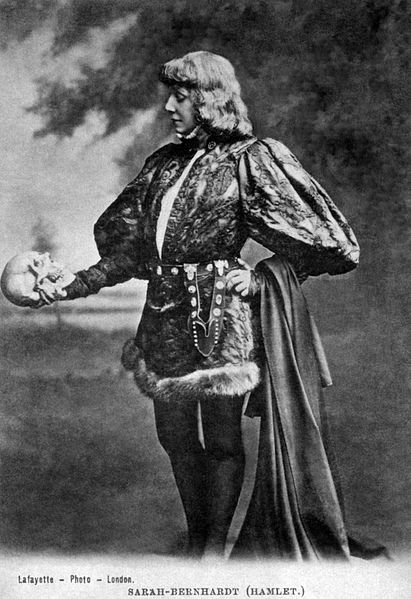

Pe masa de lucru a prietenului meu, student la medicina, a apărut într-o bună zi un craniu. Era pe vremea aceea în anul întâi şi-şi antrena obligatoriu memoria învăţând pe de rost, printre multe altele, şi mulţimea de oase cu care ne-a înzestrat natura.

Nu l-am întrebat cât îl costase sau cum ajunsese în posesia lui. Ba chiar, ştiu că începuserăm o discuţie legată de ultimul meci de fotbal mai important, când … mintea mea o luă razna, încercând să compună tot felul de chipuri pe “faţa” atât de inexpresivă a craniului ce se afla exact înaintea mea: adevărată provocare adusă imaginaţiei.

Eram încă în dilemă, neştiind ce să aleg: femeie sau bărbat? … când, am constatat cu surprindere că ceva nu era tocmai în regulă …

… până să-ntreb ce şi cum, prietenul răspunse mirării mele: “Ştii … calota e din altă parte, de aceea nu se potriveşte perfect!” 🙂


“Der Übermensch” trebuie sa fie, în cele din urmă, un robot. Spre ce duce perfecţionarea voinţei, dacă sufletul rămâne în urmă? Şi cum se poate perfecţiona sufletul fără a exersa faptele bune: compătimirea, compasiunea, caritatea?

x x x

Un Jurnal de idei se poate ţine dacă ai parte de idei, nu de jurnal!

x x x

Să gândim la viitor ca la un lucru care nu mai e al nostru: e al copiilor noştri.

x x x

Între “free” şi “lefter” – legătura o stabilesc taximetriştii din Atena, cu aparatele lor de marcat, atunci când sunt neocupaţi – adică liberi. Ele sunt inscriptionate profund şi tragic … “ελεφτεροσ”!

x x x

Frica ne egalizează, ne face pe toţi să fim la fel. Răspunsul pe care-l dăm fricii ne deosebeşte unii de alţii!

x x x

Sfântul Vasile cel Mare ne cheamă (Cuvânt ascetic II) să devenim arheologi ai sufletului noastru: adică să-l desprăfuim de povara păcatelor, să-l scoatem la lumină prin liniştirea patimilor care ne năpădesc!

x x x

(Despărţirea lui Avram de Lot). … din prea multă avere şi pentru că doreau să se aibe ca fraţii, şi ca să nu se certe, … s-au despărţit!

x x x

Pornim în căutarea binelui pentru noi, dar îl găsim abia în binele pe care-l facem celuilalt.

x x x

Civilizaţia nu se moşteneşte, ci se transmite … (zice Gordon Childe). Deci nu gena, ci dădăceala îşi face treaba!

x x x

Drumul către inima celuilalt este foarte lung şi întortocheat, dacă nu porneşte din inima mea!

x x x


Principiul este cauza generatoare, ceea ce pune în mişcare lucrurile, le aduce din nefiinţă la suprafaţa întâmplării lor.

Noi – oamenii de rând – putem observa cu mai multă sau mai puţină atenţie, pricepere şi inspiraţie doar condiţiile în care diferite întâmplări au loc. Pe baza acestor observaţii putem trage uneori concluzii greşite, căci condiţiile sunt acelea care fac ca principiile să “întârzie” sau să “grăbească” în manifestarea lor. Dar cei care credem, ştim că principiul se va aplica întotdeauna – fie mai devreme, fie mai târziu -, el nu ţine cont de felul subiectiv în care percepem noi trecerea timpului.

Astăzi punem în discuţie “principiul generaţiei frânte” la români, în epoca lor contemporană.

Sigur, pentru a fi principiu, el trebuie să se aplice universal: adică tuturor popoarelor din toate epocile istorice. Însă nu cunoaştem până în detaliul simţirii întreaga istorie a lumii în mod egal: suntem români, să ne concentrăm mai întâi asupra noastră încercând apoi să extrapolăm, dacă vom avea ce.

Epoca contemporană a românilor începe cu Marea Unire de la 1918. Vom putea spune despre generaţia care a înfăptuit-o, că este generaţia Marii Uniri. Ei sunt aceia care au trăit sub spectrul primului război mondial. Înainte de momentul istoric care i-a definit, au cunoscut bine “jugul maghiar şi german”. După, au trăit miracolul unităţii naţionale.

Generaţia interbelică – este cea ale cărei aripi au fost frânte de al doilea război mondial. Soarta ei a fost de a parcurge drumul înapoi, de la cald la frig, de la românism la anti-românism, de la afirmarea identităţii naţionale, la negarea acesteia. Au “primit pe tavă” o ţară mândră şi au fost forţaţi să o predea cotropitorului străin. Înainte, au cunoscut democraţia iar după, dictatura.

Generaţia comunistă – este cea care a pactizat cu duşmanul până la aparenta rescriere a ADN-ului, este generaţia dominată de frică deşi nu a cunoscut războiul decît din poveştile părinţilor. (Poate că poveştile despre război sunt mai grozave decât războiul însuşi?) Această generaţie s-a frânt la Revoluţia din 1989, între un “înainte-comunist” şi un “după-capitalist”.
O extensie a comuniştilor suntem şi noi, generaţia post-decembristă, care mai avem suficiente amintiri despre un trecut cartelat, în care aveam acces raţionalizat la alimente şi programe de televiziune. Cei care ne-am născut în anii 60-70 ai secolului trecut, avem un “înainte-socialist” pe care îl putem contrapune comparativ pentru înţelegerea libertăţilor care au venit “după”.

Principiul “generaţiei frânte” – dacă ar fi ca el să existe cu adevărat -, s-ar aplica generaţiei post-post-decembriste (adică celor născuţi după 1990), astfel: vremea marii confruntări care le va influenţa destinul şi le va da un nume propriu, va veni şi pentru ei – atunci când  toate condiţiile vor fi împlinite. Deocamdată nu au cu ce compara prezentul pe care-l consumă în galop, însă atunci când el se va încărca suficient de trecut, explozia -inevitabil- se va produce … Pentru că toţi, în toate timpurile avem nevoie să comparăm istoria pentru a o înţelege  într-un “înainte” şi un “după”: fiecare generatie are nevoie de un test al istoriei, prin care sa se inteleaga pe sine si rostul sau in succesiunea fireasca a vremurilor.